
👋 Introduction
Every parent wants their child to grow up kind, confident, and responsible — but it all starts with the little things we do every day. Good habits for kids aren’t built overnight; they’re small routines that slowly shape a child’s behavior and attitude toward life.
Whether it’s brushing their teeth, saying thank you, or helping at home — these tiny habits go a long way in building a happy, healthy personality.
💭 Why Are Good Habits So Important?
Good habits make life easier — not just for kids, but for parents too. They help children:
- Stay healthy and active
- Learn discipline and patience
- Become more responsible
- Build strong relationships
- Feel proud of themselves
The best part? Once a good habit becomes part of their routine, you won’t have to remind them — it becomes automatic.
🌞 10 Good Habits Every Kid Should Learn
1. Waking Up Early
Early mornings are peaceful and give kids more time to get ready without rushing. A short morning routine — brushing, stretching, maybe a little music — sets the tone for the whole day.
2. Keeping Clean
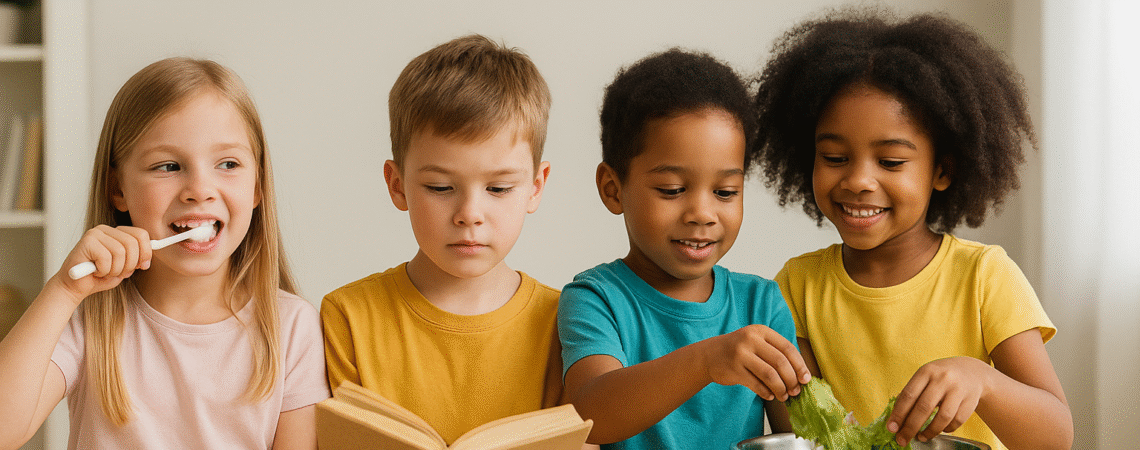
Simple hygiene habits like brushing twice a day, washing hands before meals, and bathing regularly teach self-care and confidence. Kids love routines when they feel independent.
3. Eating Healthy Food
Junk food may be tempting, but nothing beats the strength that comes from fruits, veggies, and homemade meals. Make healthy eating fun — let your child help you pick or cook their food!
4. Reading a Little Every Day
Books open up imagination. Just 10–15 minutes of reading — stories, comics, or picture books — can improve language and creativity.
5. Respecting Others
Using words like please, thank you, and sorry builds kindness. Teach them to listen patiently and treat everyone — from teachers to friends — with respect.
6. Helping at Home
Even small things count: folding clothes, feeding a pet, or setting the table. When kids help out, they learn teamwork and responsibility.
7. Spending Less Time on Screens
It’s hard, we know! But limiting mobile or TV time encourages kids to play outside, explore nature, or create something new.
8. Always Being Honest
Honesty makes kids trustworthy. Appreciate when they tell the truth — even if it’s a small mistake. It builds their courage to do the right thing.
9. Saving Money Early
A piggy bank is a great start. Teach them to save a part of their pocket money. It’s a fun way to learn the value of money.
10. Saying Thank You Every Day
A simple “thank you” can brighten anyone’s day. Gratitude helps kids focus on what they have, not what they don’t.
🏡 Tips for Parents to Build Good Habits
- Kids copy what they see — be their role model.
- Praise them for small efforts, not just big results.
- Use fun visuals like charts or stickers for daily routines.
- Don’t force it — make learning habits part of playtime.
- And most importantly, stay patient. Good things take time.
💬 Final Thoughts
Raising good habits in kids isn’t about perfection — it’s about progress. One small step every day makes a big difference over time. Celebrate their efforts, guide them gently, and watch how these habits slowly shape their personality for life.
Because one day, those “little habits” become the strengths that define who they are. 💖
📚 Quick FAQs
1. At what age should I start teaching habits?
As early as 2 or 3 years old — even simple things like saying hello or putting toys away count.
2. How do I make good habits fun for my child?
Turn them into games — use rewards, colorful charts, or friendly competitions.
3. My child forgets their routine often — what should I do?
Don’t scold. Gently remind them and appreciate effort. Consistency matters more than perfection.
Also Read: How to Send Money from Credit Card to Bank Account (2025 Guide)
Also follow the UNICEF guide